How it works
What actually happens.
Every screen below is the real product, not a mock-up. The calls in them are the ones your shop takes every week — an emergency at nine at night, a job somebody wants on the calendar, a caller ringing round three companies for a price.
Somebody answers, every time
No menu, no hold music, no promise to call back. It picks up on the first ring at two in the afternoon and at two in the morning, and it already knows what you do, where you go and when you work.
A large share of the calls a home service business gets arrive when nobody can pick up — evenings, weekends, and the middle of a job. Those are the ones that go to whoever answers next.
It works out what the job actually is
It asks what you would ask. What is happening, how long it has been happening, whether anybody is in real trouble, and where they are. Then it grades it — an emergency comes through as an emergency, and somebody price-shopping comes through as somebody price-shopping.
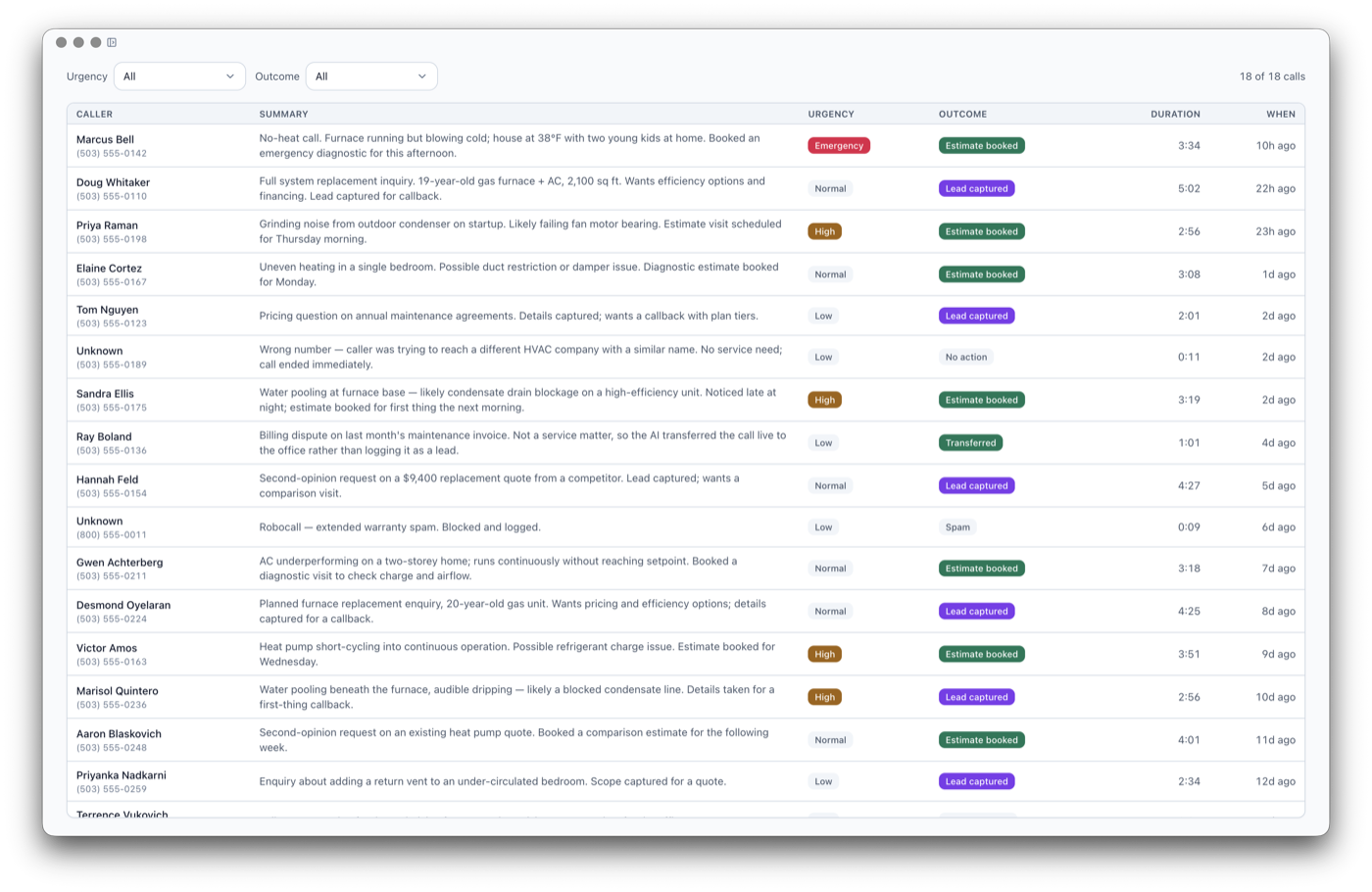
If it can be booked, it books it
The estimate goes on the calendar before the caller hangs up. If the job needs you, it captures everything and flags it for a callback rather than guessing.
You see what it was worth
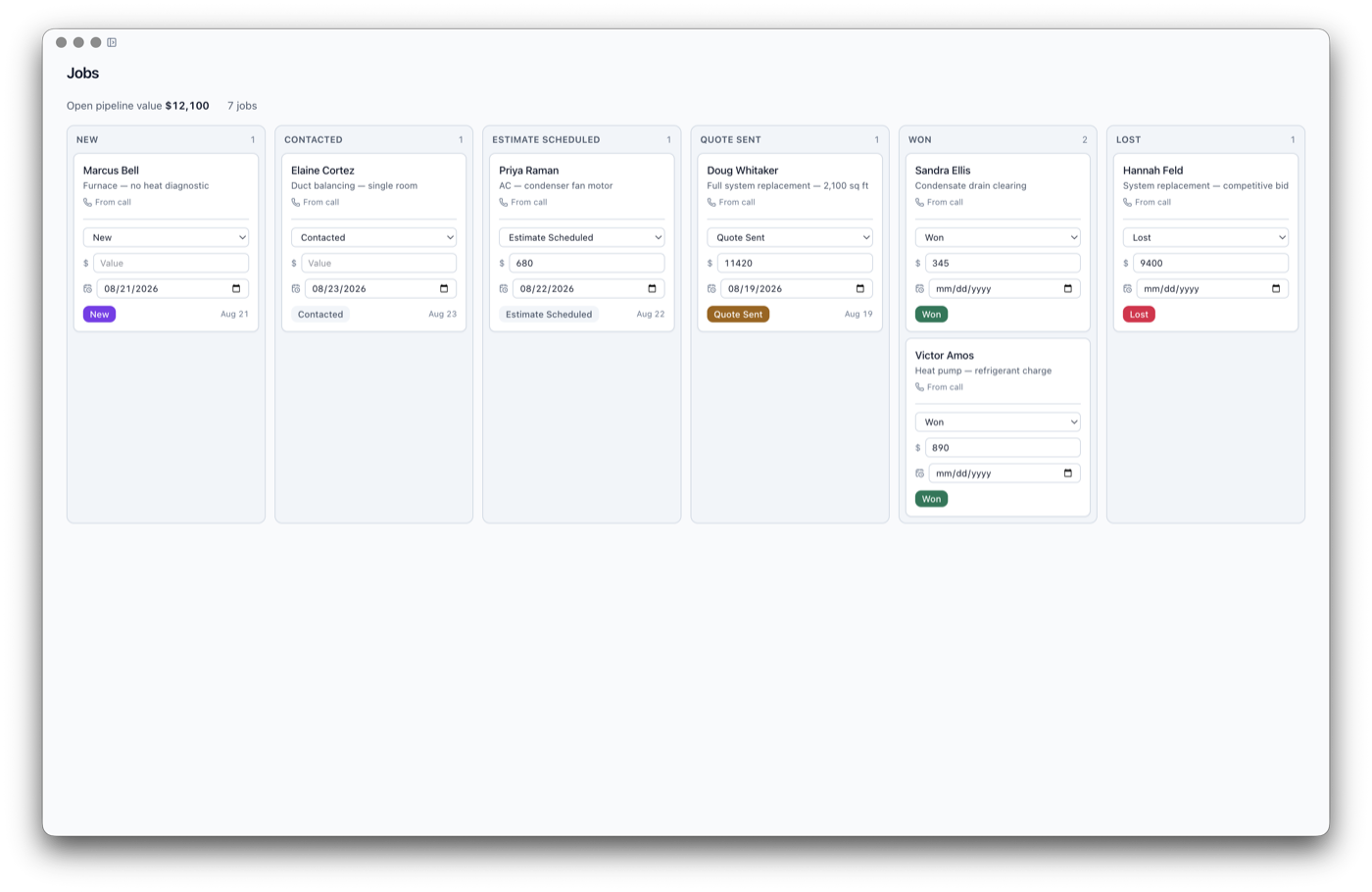
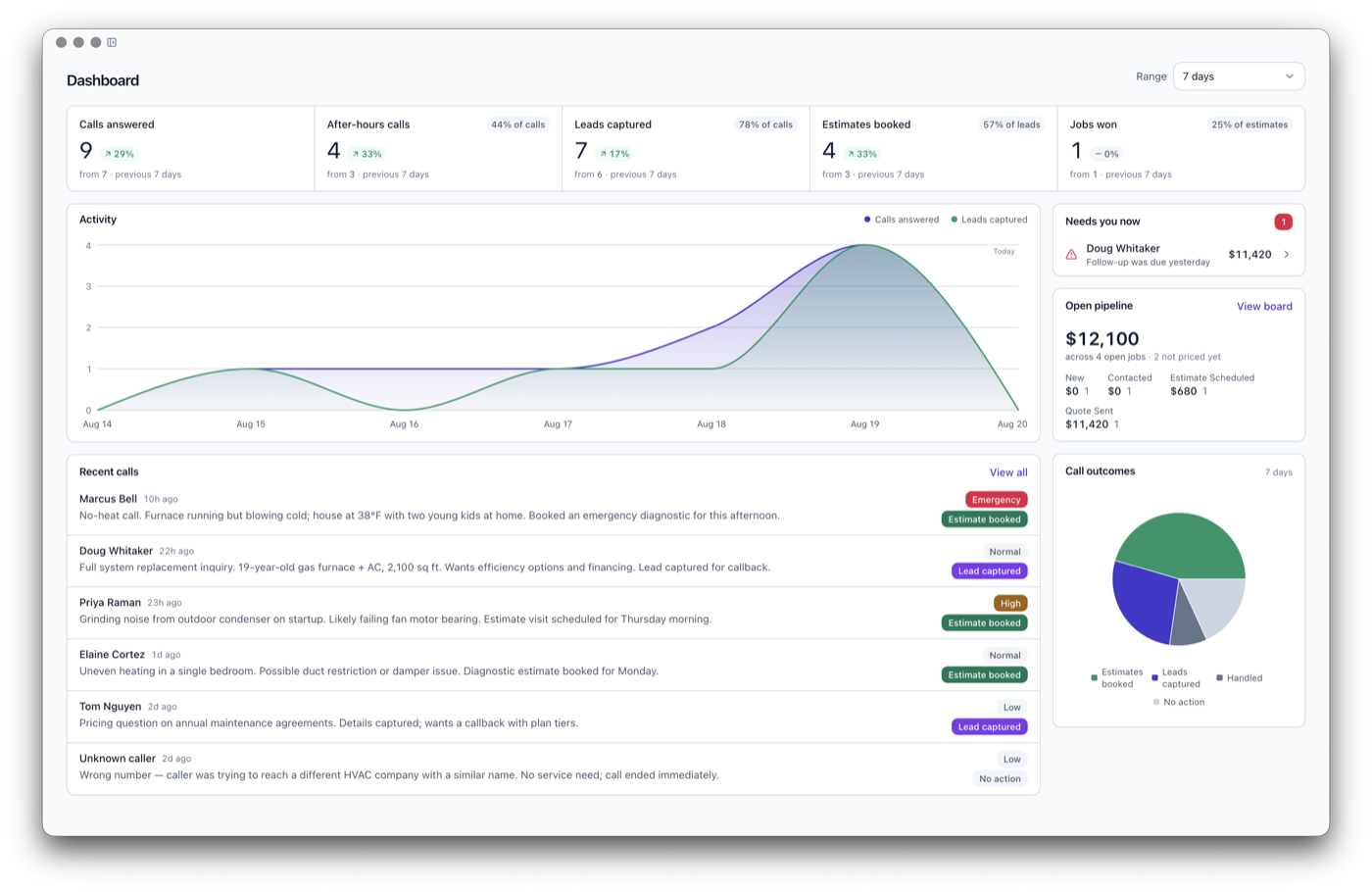
Calls answered is a number that flatters everybody. The ones that matter are how many turned into leads, how many turned into booked estimates, and how many turned into money — which is what this screen is for.
Then it keeps working after the call
The estimate nobody confirmed gets chased. The customer who never left a review gets asked. Your listing, your reviews and your ads keep bringing the phone back to life, and the quotes and invoices go out without anyone sitting down at a laptop on a Sunday. How much of that runs is what separates the four packages.
Answering the phone is where most shops are bleeding, so it is where most start. It is not where the system stops.
Honest limits
What it does not do.
Worth saying plainly, because the opposite gets promised a lot.
It does not pretend to be human
If a caller asks, it says what it is. Shops that tried the other way got caught, and it cost them the call.
It does not quote work
It captures the scope and books the visit. Pricing a job over the phone without seeing it is how you lose money.
It does not text your customers
Outbound messaging is off until carrier registration is approved. Anyone selling you automated review texts today is selling you a compliance problem.
How it handles the awkward parts
Will it tell callers it is an AI?
- If a caller asks, it says what it is. Shops that tried the other way got caught and it cost them the call, so it does not pretend to be a person. Several states also require disclosure, and the requirement varies by state.
Are calls recorded and transcribed?
- Yes — calls are recorded, transcribed and summarised, which is how you get a written outcome instead of a voicemail to replay. Recording consent and AI-disclosure rules differ by state, and we maintain a state-by-state compliance matrix rather than applying one rule everywhere. The privacy policy sets out how that data is handled.
What happens if it cannot answer a question?
- It captures everything and flags the call for you rather than guessing. The failure mode we design against is a confident wrong answer, so anything outside what it knows about your shop becomes a callback with the details attached.
Will it quote a job over the phone?
- No. It captures the scope and books the visit. Pricing work sight-unseen is how shops lose money on a job before anyone has driven to it.
Does it text my customers?
- Not yet. Outbound messaging stays off until carrier registration completes, so automated review-request texting is not something we sell today — and you should be sceptical of anyone offering it to you now. Everything else runs, and messaging switches on when registration clears.
How does it decide what counts as an emergency?
- It asks what is happening, how long it has been happening, and whether anyone is at risk, then grades the call against rules you set for your shop. An emergency arrives flagged as one; somebody price-shopping arrives flagged as that.
Does it replace my dispatcher?
- No. It answers, qualifies and books, and it hands you the calls that need judgement. Dispatch, arrival windows and who goes where stay with your people.
The fastest way to judge it is to call it.
Book a demo and you get a number of your own. Ring it, describe a job the way your customers do, then look at what showed up in the portal while you were still on the phone.